Cooling System Repair in Kinnelon, NJ
A small coolant leak is the cheapest version of this problem you will ever see. Overheating is the expensive version, and it arrives without much warning.
Why Coolant Leaks Escalate So Fast
Most cooling system failures on a modern European car start as a plastic part going brittle. Thermostat housings, expansion tanks and coolant fittings all live through thousands of heat cycles, and eventually one of them weeps.
At that stage it is a part and an hour. What makes it urgent is what happens next: a turbocharged engine that loses coolant does not tolerate it, and the gap between a weep and a head gasket is shorter than most owners expect.
So we treat a coolant smell or a low level as something to investigate now, and we replace the housing rather than only the thermostat, because doing the cheap part first usually means paying the labor twice.
What to Watch For
A sweet smell after driving
Coolant. Often the first sign, and often before anything shows on the driveway. Worth acting on immediately.
Coolant level dropping with no visible leak
Either an external weep that evaporates on a hot engine, or an internal loss. The second one matters a great deal more.
Temperature gauge climbing in traffic
A failing thermostat, a tired water pump or a cooling fan that is not commanding on. All diagnosable rather than guessable.
Heater blowing cold
Low coolant, an airlock, or a heater core issue. It is a cooling system symptom, not a heater fault.
A crusty white or colored residue
Dried coolant at a fitting or hose joint. It marks the leak path even when the leak is not active.
A rattle or whine from the front of the engine
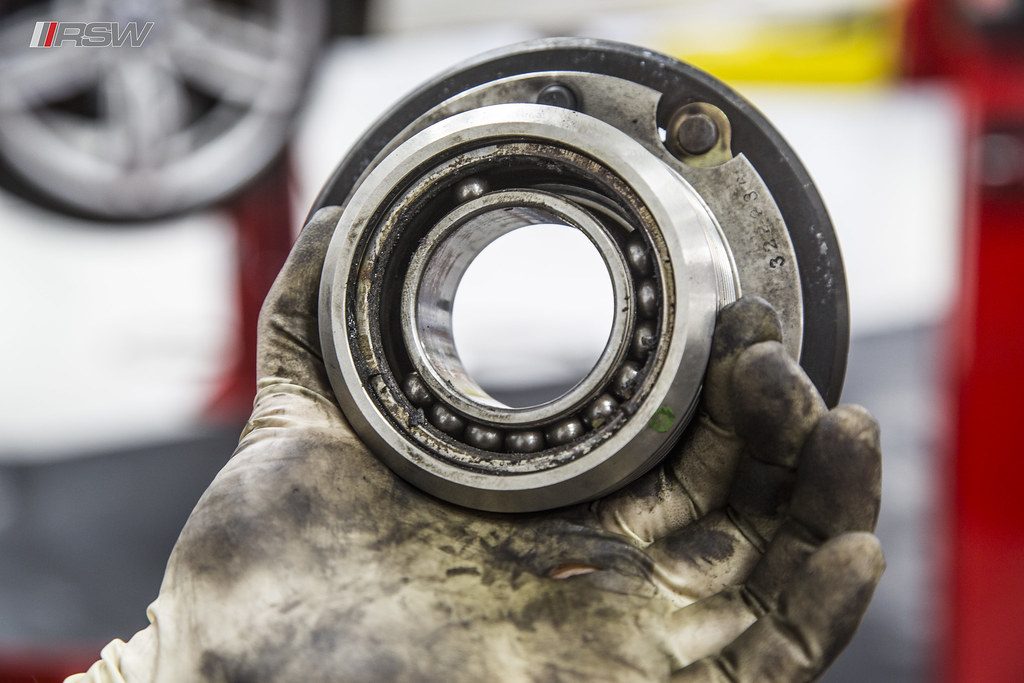
Water pump bearing wear. On engines where the pump sits behind the timing cover this is worth catching early.
What the Job Includes
- Pressure test of the system to find the leak rather than guess at it
- Thermostat housing replaced as an assembly, not just the thermostat
- Water pump, hoses and expansion tank assessed while access is open
- Correct coolant specification for your vehicle, never a universal mix
- Proper vacuum fill and bleed, because an airlock causes the next overheat
- Warranty options available up to 3 Year / 36,000 Mile on qualifying repairs
How We Do It
- 1
Pressure test
We find where it is actually leaking rather than replacing the most likely part and hoping.
- 2
Check the history
If the coolant has ever been topped up with the wrong type we will see it, and we will tell you.
- 3
Replace the assembly
Housings and fittings as complete parts, so the brittle plastic next to the failed plastic is not left in place.
- 4
Vacuum fill and bleed
Air in the system is the most common reason a repaired car overheats again a week later.
- 5
Verify under load
Run to temperature, confirm fan operation and thermostat behavior with live data before it goes back to you.
Factory-Level Diagnostic & Programming Capabilities
We hold manufacturer level computer licenses across Mercedes, BMW, Porsche, Audi, Volkswagen, Volvo, Ford, GM, Jaguar and Land Rover, so module coding, adaptations and calibrations happen here rather than being referred out.
Electric water pumps, map controlled thermostats and electronically commanded cooling fans all report through the engine module. Reading live coolant temperature, commanded fan duty and thermostat position is how the cause gets identified rather than the symptom replaced.